

Blog: Taking the Power Back
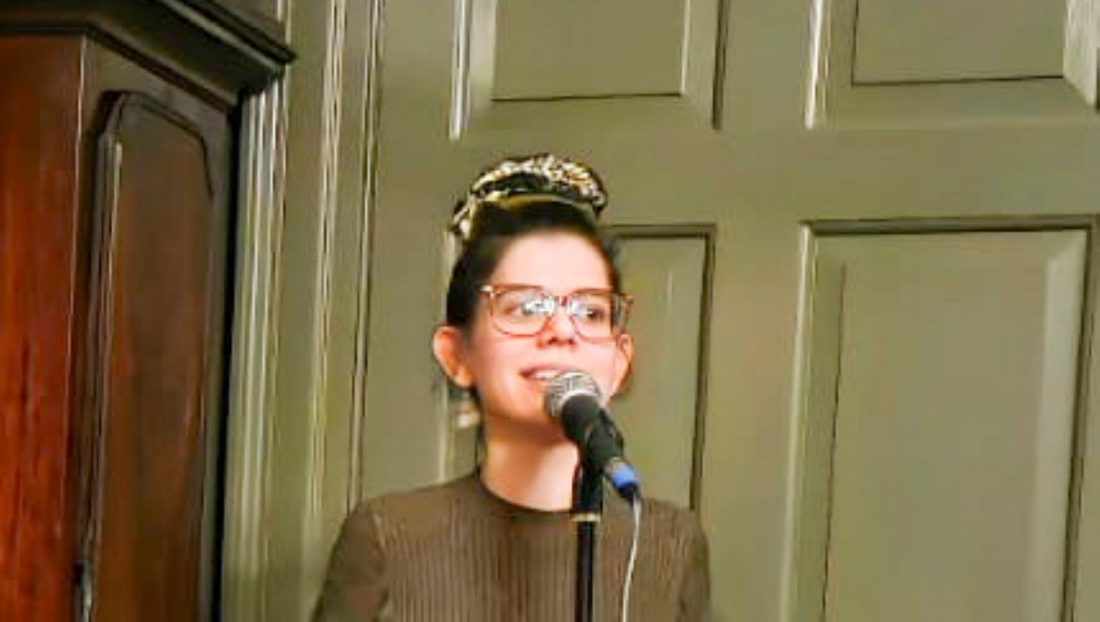
Gigi’s reflection on her role at SGSG as a grant-making foundation, before moving onto a new job in the charity sector
“Sorry, but… are you guys poor?”
I stared at Ciara, my childhood friend, completely dumbfounded. It was the first time she’d ever been to my house and stepped foot into my bedroom that I shared with my older sister—small, cosy and overflowing with my mum’s never-ending hoard. We came in to get my carrier bag of toys.
I blinked. “No… we’re not poor—”
“No!” she interrupted quickly, regretting what she said immediately, vigorously shaking her head. “Sorry! Forget I said that!”
Her words hung in the air for a few seconds, quickly replaced by the usual giggles and games of eight-year-old kids. She lived in a big Victorian terraced house, had a bedroom all to herself and had the biggest luxury of all in the 90s: Sky TV! (She was planning to go home later that night and catch the replay of Eastenders with her mum at 10 pm.)
Still, I never thought my family were poor. I had a home, my favourite toys (even if they lived in a carrier bag), and there was always food on the table. But that day, for the very first time, the word ‘poor’ slipped into my mind—quietly and confusingly it stayed there.
Fast forward to adulthood, and I found myself back where it all began—I’d landed a teaching role at the very same primary school I attended as a child. Walking through those familiar hallways and climbing the same brown staircases (it had been 20 years and the corridors looked exactly the same!), I was hit by something I’d never noticed before: the sheer level of deprivation.
Today, around 85% of the pupils are eligible for pupil premium. More than 90% come from ethnic minority backgrounds. Many of their parents are either working themselves to the bone in blue-collar jobs or unable to work and relying on benefits.
Had it always been like this? Maybe it was better that I didn’t notice as a child because facing the reality as an adult was really depressing.
After a year, I moved on to what would be my final role in the education sector—at a private nursery. There, the contrast was stark. The parents were highly educated, well-off and most of the children were on track to attend private primary schools.
Two jobs, two different ends of the spectrum.
Around this time, I came across an organisation called 2027. Their mission is to bring more working-class individuals—especially those who have served their communities—into decision-making roles within the social and philanthropic sectors. Their goal is to shake up an industry where decisions about working-class communities are too often made by those from positions of socio-economic privilege.
I was fortunate enough to be selected. I was given a seat at the table and a chance to be a voice for the very communities I’d grown up in and served. Many of the families I now support remind me of the children at my old school, my neighbours, even my younger self.
There’s something deeply meaningful about being able to make a working-class mother’s life just a little easier – whether it’s replacing a broken fridge she couldn’t afford to fix or funding a local arts club that gives her children a safe and creative space to go after school or during the holidays. It reminds me so much of my own childhood and the community spaces that helped me develop as an individual.
That’s what makes this work so powerful: helping families build a stable, nurturing environment for their children and giving those children the chance to flourish – to access opportunities in education and beyond that might otherwise have been out of reach.
And beyond all this, the goal is to challenge and reshape the hierarchical structures, not just within the philanthropy sector but across all sectors. It’s about bridging the gap and championing true inclusion, and access to opportunities so that a child growing up in a small council flat has the same chance to thrive as one raised in a 5-bedroom Victorian terrace house.
If we can do this in the philanthropy sector, we can create spaces where decisions are grounded in lived reality and genuine understanding. In doing so, we move closer to a world where every voice matters and opportunity belongs to everyone. By truly seeing people’s potential and honouring their lived experience, we will not just diversify our boardrooms; we will transform them.